We want to create the biggest online listing collection of Domes around the world!
Please add you short stay dome rentals now.
A dome is a spheric that can offer you both unmatched luxury as stunning views. Bookadome collect the most beautiful domes to book from around the world !
10 Domes found
Europe
Netherlands
Spain
Scotland
Wales
England
List your dome on this page?
Add linkSleeping in a dome: what to know before a night under the curve
There is something about a round room that makes people relax. No corners, a high ceiling, and often a big window or a fully transparent wall that brings the landscape, the sky and the weather right to your bed. Domes have become one of the most popular forms of glamping, and for good reason: they are simple to build in wild places, strong against wind and snow, and they create a stay that feels very different from a hotel room.
But domes also behave differently from ordinary buildings. They heat up in the sun, cool down at night, let in light early in the morning and carry the sound of rain in a way a house does not. This guide covers the kinds of domes you will find on this page, where they are, and the practical details that make the difference between a magical night and a restless one.
Not all domes are the same
- Geodesic glamping domes are the most common type: a frame of triangles covered with a heavy canvas or PVC skin, usually with a large panoramic window, a proper bed, a stove or heater and sometimes a deck with a hot tub.
- Bubble domes are inflatable, fully or partly transparent spheres kept up by a quiet air blower. They are made for seeing the sky from bed.
- Transparent and glass domes use rigid clear panels, often in cold regions where guests want to watch the aurora or the stars in comfort.
- Eco-domes focus on low impact, with natural materials, solar power, rainwater collection and composting toilets.
- Earth domes are solid structures built from earth, earthbags or concrete, sometimes partly covered with soil and plants. They stay cool in hot weather and hold warmth in cold weather, much like a cave.
Domes around the world
Domes turn up wherever the landscape is the main attraction. In Chile, the Atacama desert is famous for some of the clearest night skies on earth, and domes there are built for stargazing, while further south, domes in Patagonia face mountains, lakes and glaciers. In the far north, Iceland, Finnish Lapland and northern Norway and Sweden offer transparent domes and glass-roofed stays for watching the northern lights through the winter. Costa Rica's rainforests and cloud forests have domes among the trees, full of birdsong and the sound of the jungle. New Zealand and Australia have domes on farms, in vineyards and under dark southern skies. In the United States, the deserts of the Southwest, such as around Joshua Tree and in Utah, are popular for dome stays under huge open skies. And across the countryside of Europe, Asia and Africa, you will find domes in meadows, forests and on hillsides.
Heat, cold and condensation
Temperature is the one thing dome guests talk about most. A dome with a large window or a transparent skin works a bit like a greenhouse. On a sunny summer afternoon it can get very hot inside, so look for domes with shade, blinds, ventilation openings or air conditioning, and plan to be outside during the hottest hours. At night, especially in deserts and mountains, the temperature can drop sharply, and a thin canvas wall does not hold heat for long. A wood stove, a good heater and a thick duvet make all the difference.
Condensation is the other side of the same coin. When warm, moist air from breathing, showering or cooking meets a cold wall or window, water forms on the inside. In a well-designed dome, vents and a dehumidifier keep it under control. In a simple one, you may wake up to droplets on the window or a clouded view of the stars. Keep a vent slightly open, do not dry wet clothes inside, and ask the host how they deal with it.
Privacy and light
A transparent wall is wonderful for the view, but it works both ways. Check how far the dome is from its neighbours and from paths, whether there are curtains or blinds, and whether the bathroom has a solid wall. Many domes are placed so that the window faces open country rather than other guests, but it is worth asking. Remember also that transparent domes get light very early in summer, when dawn can come in the middle of the night at high latitudes. An eye mask is a small thing that can save your sleep.
The sound of rain and wind
Canvas and plastic carry sound. Light rain on a dome can be one of the most soothing things you will ever fall asleep to. Heavy rain, hail or strong wind is louder, and the fabric may flap or the frame may creak. Domes are designed to handle wind well, but if you are a light sleeper, bring earplugs. Inflatable bubbles also have the steady hum of the blower that keeps them up, which most people stop noticing after a while.
Bathrooms: inside or outside?
Some domes have a private bathroom inside, often in a separate section or a small attached structure. Others share a toilet and shower block a short walk away, and some eco-domes use composting toilets. None of these is wrong, but a walk across a wet field at three in the morning is something you want to know about in advance, especially with children or in cold weather.
Planning a night of stars
If stargazing is the reason for your trip, the moon matters as much as the weather. Around the new moon, the sky is darkest and the Milky Way is at its best. Around the full moon, the landscape is beautifully lit but fainter stars disappear. Check a moon calendar before choosing dates, and look for domes far from towns and street lights. For the aurora, you need dark winter nights in the far north, clear skies and some luck, so book several nights rather than one. And remember that seasons are reversed in the Southern Hemisphere: the long, dark winter nights in the Atacama, Patagonia, New Zealand and Australia fall around June to August, which is the best time there to see the centre of the Milky Way high overhead.
Questions to ask before you book
- How is the dome heated, and does it have cooling or ventilation for hot days?
- Is the bathroom inside the dome, attached, or a separate shared building?
- How private is it, and are there blinds or curtains on the transparent parts?
- How far is the nearest other dome or building?
- Is there electricity for charging phones and cameras?
- How do you prevent condensation on the window?
- Is there a kitchen, or are meals available nearby?
- How dark is the sky at night, and is there any outdoor lighting?
- Can I reach the dome by car, or is there a walk with luggage?
A few tips for your stay
Pack layers even in summer, because a warm afternoon can become a cold night. Bring a red-light torch, which lets your eyes stay used to the dark while you move around outside. A stargazing app on your phone helps you name what you see, and a small pair of binoculars shows more than you would expect. Leave shoes at the door to keep the floor clean, keep food sealed so insects and animals stay out, and step outside at least once in the night: the view from the deck is often even better than the one from bed.
How to use the dome listings
The domes on this page are grouped by continent, country and region, so you can quickly find stays in the landscape you are dreaming of. Each link takes you to the owner's own website, where you can check availability and book directly. Do you run a dome, bubble or eco-dome? Add your link for free with the button above and let more travellers discover a night under the curve.
Looking for an awesome place to spend your holiday?
Or want to advertise your houseboat, lighthouse, treehouse or glamping?
Check these links below!
Blog posts
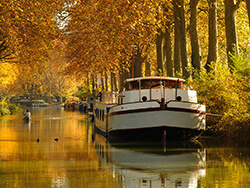
Barge river cruises in France
River cruises in France are the next luxury holiday destination. Cruise your private barge with cook down the French rivers.
Read more..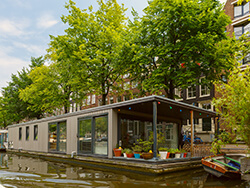
Rent a houseboat in Amsterdam
A houseboat is a great place to stay when visiting Amsterdam. Stay close to the city center but have a lot of private space.
Read more..